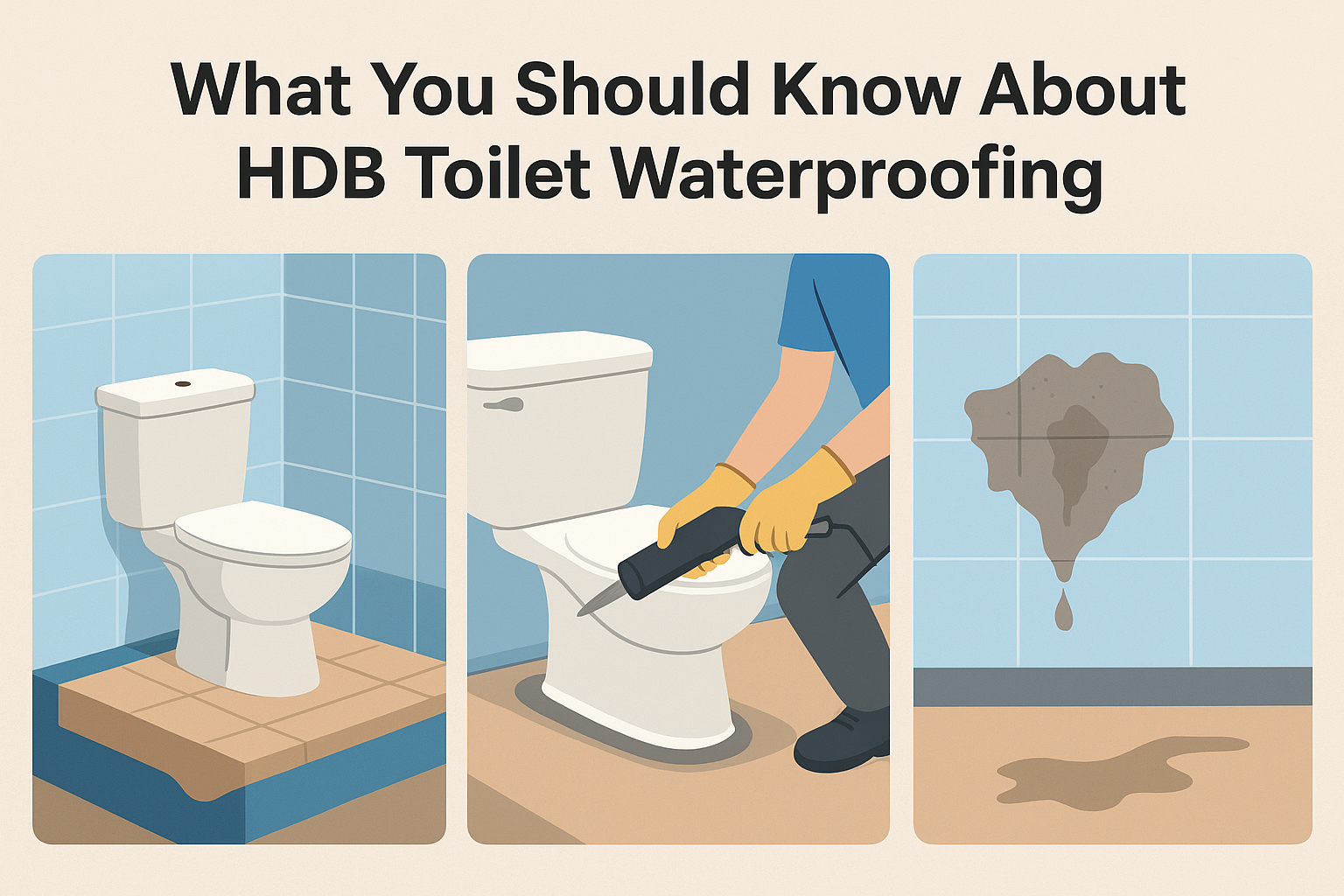
Toilet waterproofing is a crucial process for any home—especially HDB’s. HDB flats are shared structures, where every wall or floor is connected to each other. This means a leak doesn’t just affect your unit, but also those below it, leading to a whole range of problems.
Here’s what you should know about HDB toilet waterproofing and why it’s so important:
What Is Toilet Waterproofing?
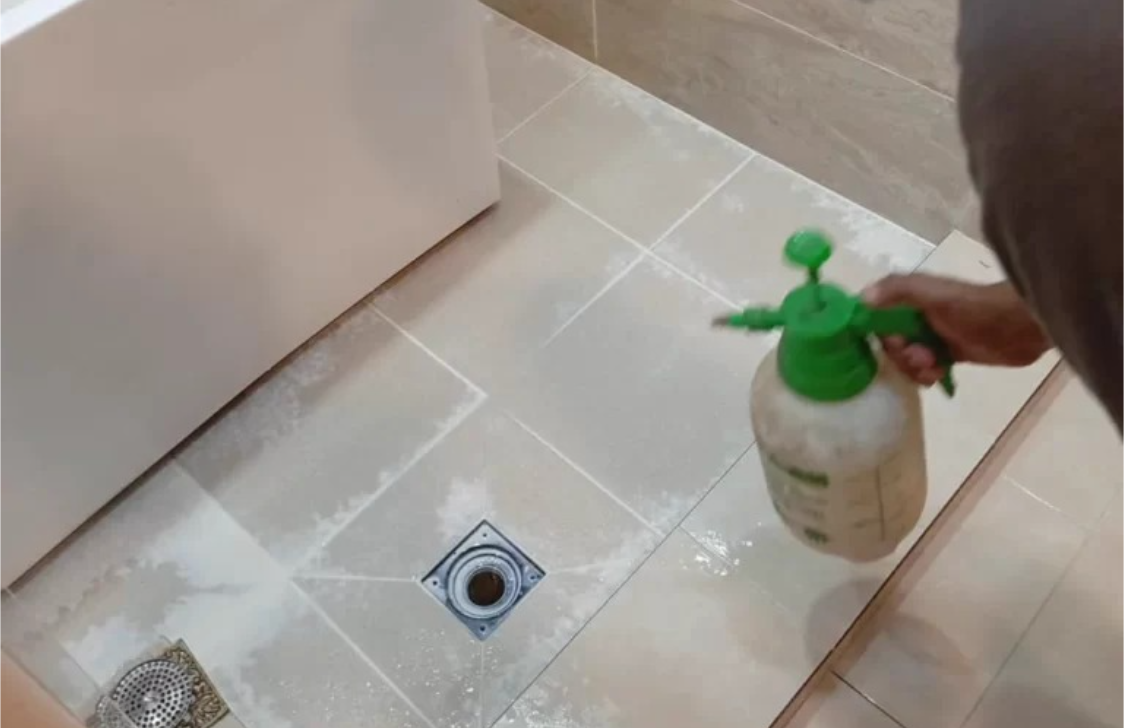
For starters, toilet waterproofing is designed to protect the structure of your toilet. It involves creating a watertight barrier beneath your bathroom floor and walls to prevent water from seeping into the concrete.
This barrier acts as the first line of defence against leaks. When it’s properly installed, it ensures that any water on the surface stays contained within the bathroom area. Without this, water can easily seep into the structure of your toilet, causing long-term damage.
Why Toilet Waterproofing Is Crucial for HDB Flats
Waterproofing for HDB’s is important for all the reasons above and more. These flats are interconnected to one another, sharing common elements such as floors and walls. This means a leak in your toilet can easily seep through to the unit below, damaging your unit and theirs.
Older HDBs may also be more susceptible to leaks due to wear and tear over time. The waterproofing membrane in these flats can deteriorate after years of daily use, especially in wet areas like toilets.
The Benefits of HDB Toilet Waterproofing
- Prevents Water Damage
A waterproof toilet stops water from seeping into the concrete structure. This helps prevent issues like ceiling stains or mould growth in both your home and your neighbours. - Reduces Repair Costs
Fixing a leak after it happens often costs much more than doing proper toilet waterproofing from the start. By keeping your waterproofing layer intact, you can avoid expensive structural repairs in the future. - Maintains Structural Integrity
Water that seeps into the concrete can cause long-term deterioration. Proper waterproofing strengthens the durability of your toilet floor and walls, extending the lifespan of your bathroom. - Improves Hygiene and Comfort
Leaks and moisture lead to damp conditions where mould and bacteria thrive. Waterproofing helps keep your bathroom dry, reducing unpleasant smells and creating a cleaner environment. - Avoid Potential Disputes
Toilet waterproofing can help you avoid potential disputes with your neighbours. Leaks can be a nuisance especially when you’re on the receiving end of it. This can lead to tension, complaints and shared repair costs.
For more information on shared responsibilities, do check out HDB’s guideline on ceiling leaks.
Signs of Waterproofing Failure in HDB Toilets
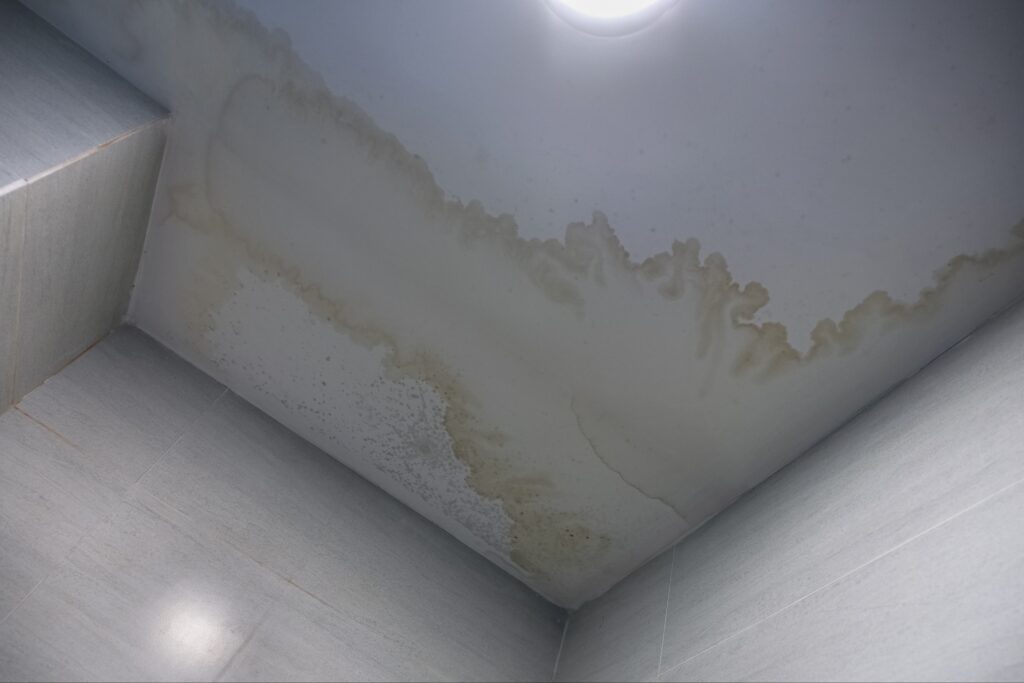
- Water Stains on the Ceilings or Walls: Brown or damp stains on your neighbours ceiling is often the first sign of a leak. Within your own bathroom, you might see stains or bubbling paint—signs of trapped moisture.
- Persistent Dampness or Musty Odours: A constantly damp floor or a lingering musty smell usually points to water seeping beneath the tiles. This could mean the waterproofing layer underneath has been compromised.
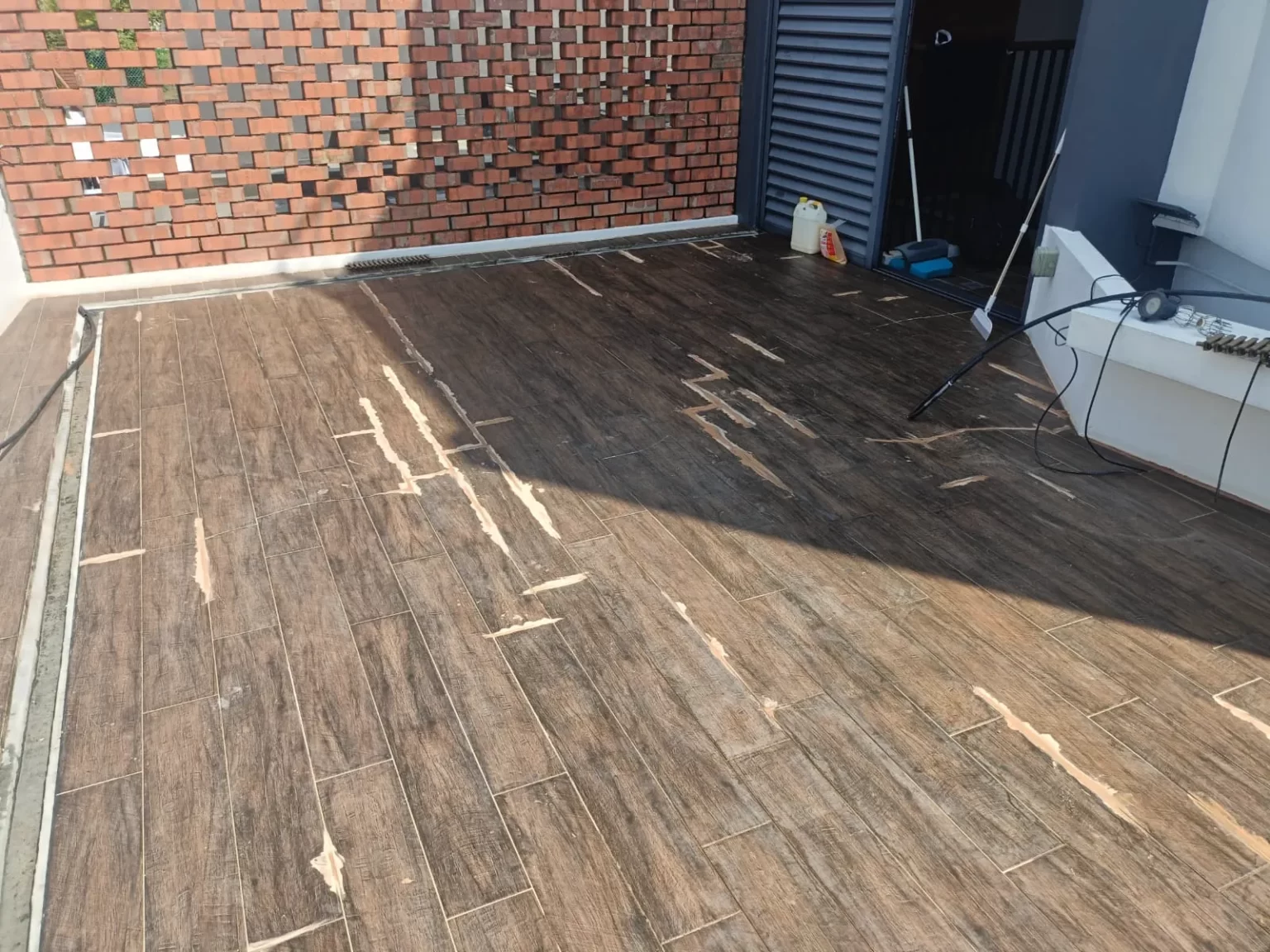
- Loose or Cracked Floor Tiles: When water gets under the tiles, it weakens the adhesive holding them in place. You may start noticing hollow sounds when you step on the tiles or even visible cracks. These are signs that water has made its way beneath the surface.
- Mould and Mildew Growth: Black mould or mildew around corners, grout lines or the lower parts of the wall are red flags. These thrive in moist, poorly sealed environments and often appear when waterproofing has failed.
- Peeling Paint or Blistering Surfaces: If you see paint starting to peel or bubble on your bathroom wall or even outside the toilet area, it’s a sign that moisture has spread beyond the waterproofed zone.
How to Maintain Your Toilet Waterproofing
Waterproofing doesn’t last forever. With that said, you can extend its lifespan with some simple maintenance tips. First of all, avoid using harsh chemicals that can erode the tiles. This includes strong acidic or alkaline cleaners that can wear down the waterproofing membrane.
Next, keep your bathroom well-ventilated. Good airflow helps moisture evaporate quickly, preventing dampness and mould growth. You can do this by switching on the exhaust fan during and after showers, or by keeping the bathroom door slightly open to let air circulate.
Lastly, avoid drilling or hammering into the floor or lower wall areas unless absolutely necessary. Even small holes can puncture the waterproofing layer beneath, allowing water to seep through over time.
Conclusion
Don’t forget to waterproof your toilet before it’s too late. Early toilet waterproofing can save you from major headaches like structural issues and neighbour disputes. If you’re unsure about your toilet’s condition, we offer a free inspection to help you detect potential leaks.
Our team will assess your waterproofing layer and recommend the best solution for your HDB flat.
Book your free waterproofing inspection today or visit vhwaterproofingsolutions.sg to find out more!